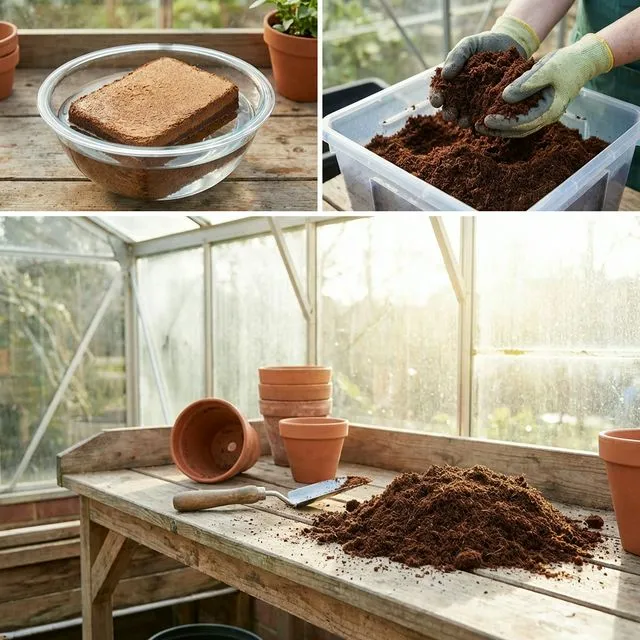
How to Use Coco Peat Blocks: A Complete Guide
Coco peat blocks are compressed bricks of coco peat that expand dramatically when water is added. Here's everything you need to know about preparing and using them.
What You'll Need
- 1 coco peat block (5kg)
- A large container or wheelbarrow
- 20-25 liters of water
- A garden fork or hands for breaking apart
Step 1: Choose a Container
Place the coco peat block in a large container, tub, or wheelbarrow. The block will expand to approximately 70 liters, so make sure your container is large enough. A standard wheelbarrow works perfectly.
Step 2: Add Water
Pour about 20-25 liters of water over the block. Use warm water if available — it speeds up the hydration process. Let the block absorb the water for 15-20 minutes.
Step 3: Break It Apart
As the block absorbs water, it will start to swell and soften. Use your hands or a garden fork to break apart the expanding coco peat. Continue adding water slowly if needed until the material is evenly moist and fluffy.
Step 4: Drain Excess Water
Let the hydrated coco peat sit for about 30 minutes to drain any excess water. The ideal consistency is moist but not waterlogged — when you squeeze a handful, a few drops of water should come out.
Step 5: It's Ready to Use!
Your coco peat is now ready. Here are the most common applications:
As a Standalone Growing Medium
Fill pots, grow bags, or raised beds directly with coco peat. It works exceptionally well for vegetables, herbs, and flowering plants. Add liquid nutrients since coco peat itself is low in nutrients.
As a Soil Amendment
Mix coco peat with garden soil at a 1:1 or 1:2 ratio. This improves drainage in heavy clay soils and water retention in sandy soils.
For Seed Starting
Coco peat is excellent for germinating seeds. Fill seed trays with fine, moist coco peat, sow your seeds, and keep them in a warm spot. The anti-fungal properties help prevent damping off.
For Hydroponics
Coco peat is one of the most popular hydroponic substrates. It provides excellent root support while allowing nutrient solutions to flow freely.
Tips for Best Results
- Buffering: For sensitive crops, soak coco peat in a calcium-magnesium solution before use to pre-load these nutrients
- Storage: Unused hydrated coco peat can be stored in bags for weeks — just keep it moist
- Reuse: After a growing cycle, flush the coco peat with fresh water and reuse for 3-4 cycles
- pH Check: Quality coco peat like Orgapeat's has a pH of 5.5-6.8, but always verify before planting sensitive crops
How Much Do I Need?
| Application | Coco Peat Needed | Blocks (5kg) |
|---|---|---|
| 10 small pots (6") | ~20 liters | 1 block |
| 4x8 ft raised bed | ~150 liters | 2-3 blocks |
| 100 seed trays | ~200 liters | 3 blocks |
| 1 acre (mixed with soil) | ~5,000 liters | 70-80 blocks |
Need Coco Peat Blocks?
Orgapeat supplies premium 5kg compressed blocks with low EC and optimal pH. Available for bulk export worldwide.
Order Now